
Shame, Trauma, and the Power of Reclaiming “I Am Enough”

The Weight We Don’t Speak About
Shame is one of trauma’s most dangerous aftershocks — not because it’s loud, but because it’s quiet, corrosive, and often invisible. Trauma may come from abuse, neglect, systemic oppression, violence, or betrayal. But shame is what lingers in the shadows, convincing survivors that they are broken, unworthy, or “less than.”
As a society, we often celebrate resilience while overlooking the silent battles people fight with self-worth. Shame tells people to shrink. Trauma tells them to hide. And the world often tells them to move on, without ever offering the space to heal.
But here’s the truth: healing begins with reclaiming the narrative. Healing begins with declaring, “I am enough.”
Shame vs. Guilt: Why Language Matters
Many survivors confuse guilt and shame, but the difference is critical:
Guilt says: “I did something bad.”
Shame says: “I am bad.”
Guilt can be useful — it can motivate change and accountability. But shame is paralyzing. It keeps people stuck in silence, disconnected from community and from themselves. Shame is the quiet prison that trauma builds.
This matters not only in personal healing but also in our collective liberation. Communities impacted by racism, sexism, homophobia, transphobia, and poverty carry compounded trauma. Shame in these contexts isn’t just individual — it’s systemic. It’s taught, reinforced, and inherited.
The Body Keeps the Score
Science backs up what survivors already know: trauma lives in the body. It shows up in tight shoulders, shallow breathing, gut issues, racing hearts. And shame makes it worse by layering on secrecy and silence.
Survivors often describe wanting to shrink into themselves, to disappear. That urge to “be small” isn’t weakness — it’s the body’s survival strategy. But over time, living in survival mode robs people of joy, intimacy, and possibility.
Trauma-informed practices like yoga, breathwork, shaking (TRE), and grounding exercises are powerful because they don’t just address the mind — they help release shame stored in the body.
Breaking the Cycle of Shame
Healing from trauma requires dismantling shame. That work is deeply personal, but it’s also collective. Here are ways to begin:
Naming It – Shame grows in secrecy. Simply naming it — saying, “I feel shame” — takes away its power.
Reframing the Narrative – Trauma lies. It whispers, “You’re not enough.” Healing is the act of rejecting that lie.
Community & Connection – Shame isolates. Healing happens in safe relationships where compassion replaces judgment.
Self-Compassion Practices – Small acts of kindness toward yourself, like affirmations, journaling, or mindful breathing, build resilience against shame.
Creative Expression – Whether through art, writing, movement, or fashion, turning pain into purpose transforms shame into empowerment.
Social Consciousness: Shame Is Not Just Individual
We cannot talk about shame without talking about systems. Black and Brown communities, LGBTQ+ individuals, women, and survivors of poverty often carry collective shame rooted in histories of oppression. Society has told marginalized groups they are “too much” or “not enough” for centuries.
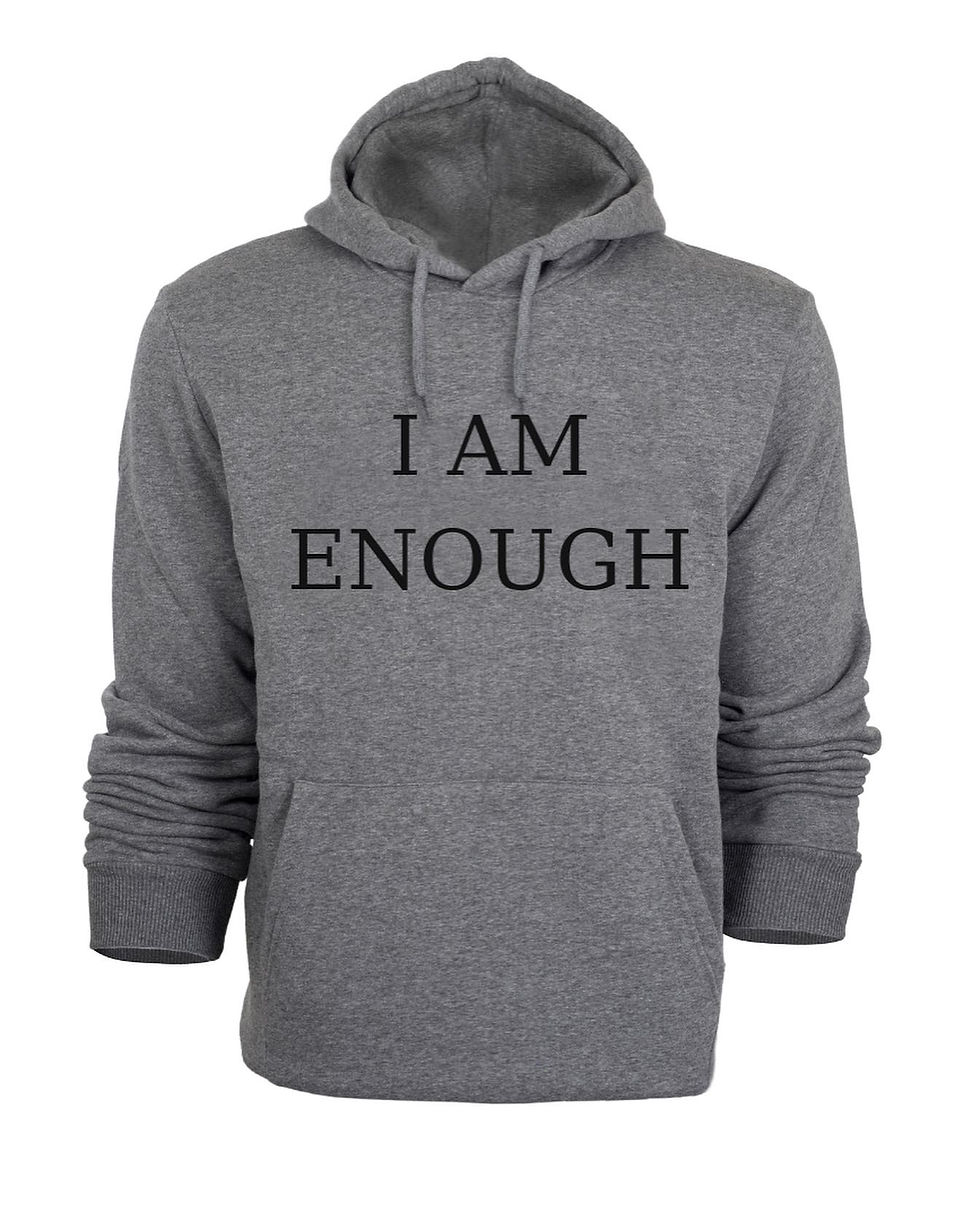
This is why affirmations matter. This is why representation matters. This is why a hoodie that declares “I Am Enough” isn’t just fashion — it’s resistance.
Every time someone wears those words across their chest, they are pushing back against generations of messaging that said otherwise. It’s not just about individual healing — it’s about collective reclamation.
The “I Am Enough” Hoodie: Fashion as Resistance
At Designs by Tee, fashion is more than clothing — it’s storytelling, healing, and activism stitched into fabric. The “I Am Enough” hoodie was created with this exact mission: to remind wearers and the world that worth is not up for debate.
When you wear it:
You remind yourself that your trauma does not define you.
You stand in solidarity with others who are healing.
You challenge a society that profits from making people feel “less than.”
It’s soft, bold, and unapologetic. Just like the people it’s made for.
Wearing “I Am Enough” is a daily affirmation — and affirmations are powerful tools for rewiring the brain away from shame. It’s not just clothing; it’s armor. It’s therapy you can wear. It’s a declaration the world can’t ignore.
Moving Forward: Collective Healing
Shame thrives in silence, but silence is breaking. Survivors, communities, and movements are speaking louder than shame ever could. From therapy rooms to street protests, from kitchen tables to classrooms, the message is clear:
We are not our trauma. We are not our shame. We are enough.
And every time you choose healing over silence, compassion over criticism, connection over isolation, you chip away at the hold trauma has had.

Comments